
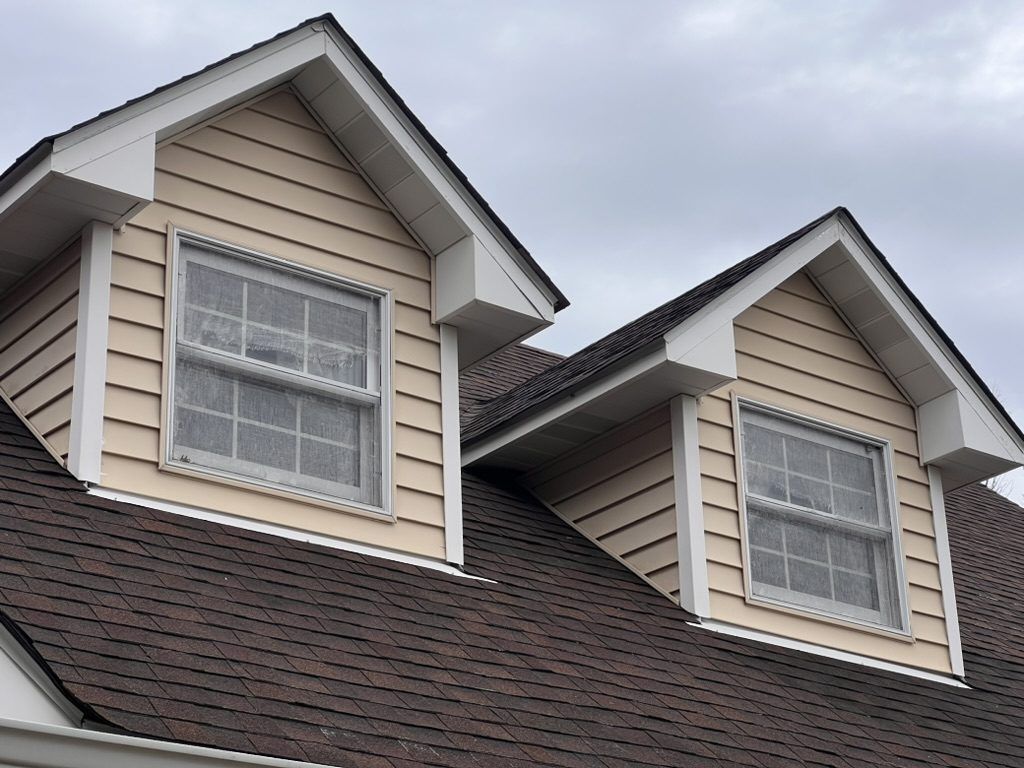
Metal vs Shingle Roofing in Missouri: An Honest Comparison
Metal versus shingle is the most common material question we get, and the honest answer is that both are right for the right home. The wrong answer is whichever one the roofer in front of you happens to sell. Emmendorfer Exteriors is factory-certified across CertainTeed, Owens Corning, Malarkey, and GAF for asphalt and installs hidden-fastener standing-seam metal, so we have no reason to push you toward one or the other. We match the roof to your home, your budget, and how long you plan to stay.
What makes this a real decision in Missouri rather than a coin flip is the climate. Eastern Missouri sits in a severe-storm corridor where spring and summer hail and straight-line wind, then a hard winter freeze-thaw, all work the same roof. The federally declared March 14-15, 2025 Franklin County disaster brought large hail, tornadoes, and straight-line winds over 75 mph. How a material handles that pattern, and how long you want to avoid handling it again, is what actually decides metal versus shingle for your home.
Metal vs shingle, side by side
Here is how the two systems compare on the factors that matter most in the Franklin County climate.
| Factor | Architectural asphalt shingle | Standing-seam metal |
|---|---|---|
| Installed cost per square | $425 to $750 | $900 to $1,600 |
| Lifespan here | 22 to 30 years | 40 to 60 years |
| Hail performance | Good, excellent with Class 4 | Excellent, may cosmetically dent |
| Wind performance | Good when properly sealed | Excellent, interlocking panels |
| Weight on structure | Light to moderate | Light, often lighter than asphalt |
| Repairability | Easy, slope by slope | Specialized, panel by panel |
| Resale flexibility | Familiar to every buyer | A premium feature, not for every buyer |
| Best roof type | Most pitches, simple to cut-up | Steeper, more exposed roofs |
Where shingle wins
- Up-front cost
Architectural asphalt costs roughly a third to a half of standing-seam metal. For most Franklin County homes, that difference is the deciding factor, and a quality architectural roof is a genuinely good roof, not a compromise.
- Hail value with Class 4
Malarkey's Class 4 impact-resistant shingle carries the top impact rating and can earn an insurance premium discount with many Missouri carriers. It closes much of the hail-performance gap with metal at a fraction of the cost, which is why we recommend it so often here.
- Resale to any buyer
Every buyer understands an asphalt roof. Metal is a premium feature that some buyers love and others are unsure about. If you may sell within a decade, shingle keeps your buyer pool wide.
- Simple repairs
Asphalt repairs slope by slope and blends in easily. After a storm, a damaged section is straightforward to fix or claim, which matters in a climate that throws hail every year.
Where metal wins
- Lifespan
A standing-seam metal roof lasts 40 to 60 years, often outliving the homeowner who installs it. For someone staying in their home long-term, it can be the last roof they ever buy, which changes the cost math considerably.
- Wind and weather
Interlocking, hidden-fastener panels have no exposed seal strips for wind to lift, so metal handles the straight-line winds that crease asphalt. On the steeper, more exposed roofs around Pacific, Villa Ridge, and the New Haven river bluffs, that edge is real.
- Hail resilience
Metal sheds hail that bruises asphalt. Large hail can leave cosmetic dents on metal, but the panel keeps doing its job, where the same hail shortens an asphalt roof's life. For a long-term owner in a hail corridor, that durability compounds.
- Low maintenance and weight
Metal needs little upkeep over its long life and is often lighter than asphalt, which is easy on the structure. Less repeated repair work over decades is part of its long-run value.
What we actually recommend, and to whom
For most Franklin County homes, a quality architectural asphalt roof is the right call, and in our hail corridor we very often steer homeowners to Malarkey's Class 4 impact-resistant shingle for the durability and the possible insurance discount. It is a strong roof at a price that makes sense, and it keeps your home easy to insure, repair, and sell.
We recommend standing-seam metal when two things are both true: you plan to stay in the home long-term, and your roof is the kind that earns it, steeper and more exposed, where wind and hail hit hardest. For that owner, metal can be the last roof they ever buy, and the higher up-front cost pays back over decades. What we will never do is push metal on a homeowner planning to move in three years, or push the cheapest shingle on a long-term owner who wanted to do it once. We name the system on your written estimate either way.
A note on metal roof noise and other myths
The most common worry we hear about metal is noise in the rain. On a modern standing-seam roof installed over solid decking and underlayment, a metal roof is not meaningfully louder inside than an asphalt one. The drumming-on-a-tin-shed image comes from old barn roofs fastened directly to open purlins, which is not how we install a residential metal roof.
Two other myths worth clearing. Metal does not attract lightning, and a metal roof is actually safer in a strike because it is non-combustible. And metal does not rust away on a modern home, because the panels we install are coated steel engineered for decades of Missouri weather. The real trade-off is simply cost versus lifespan, which is the honest comparison this whole guide is built around.
Metal vs Shingle Roofing: common questions
Not sure which roof your home needs?
A real Emmendorfer walks your roof and gives you honest numbers on both metal and shingle, with the system named in writing. Free and no obligation across Franklin County.
- We walk your actual roof before we quote it
- The manufacturer is named on your written estimate
- The price you approve is the price you pay
- Tom handles your insurance claim start to finish