
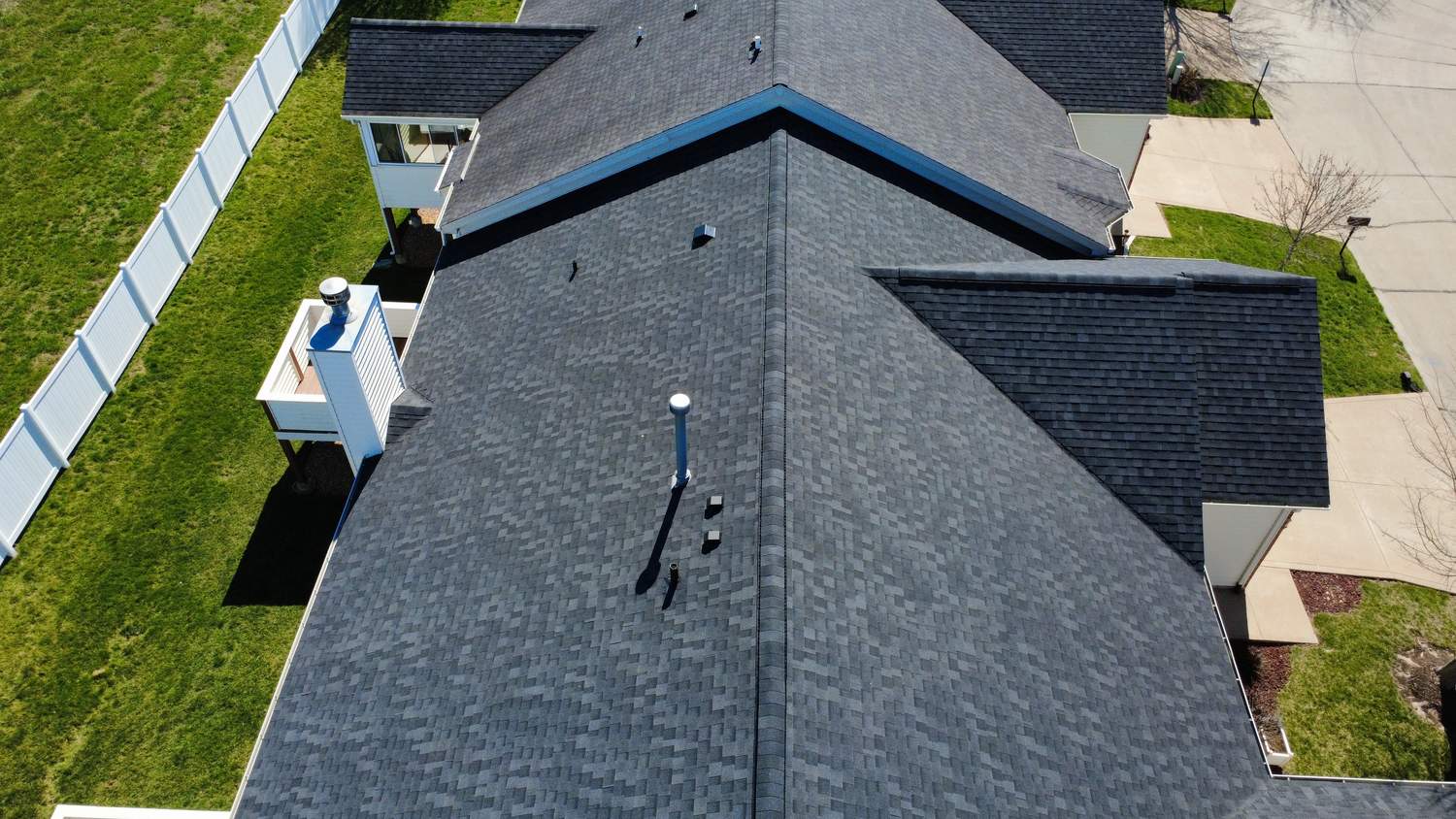
The Missouri Roof Insurance Claim Guide
A roof insurance claim is won or lost on two things: documentation, and who is standing on the roof when the adjuster climbs up. Most homeowners lose ground on both before they make a single phone call. This guide walks the entire Missouri claim process the way Tom Emmendorfer runs it, from the first inspection to the supplement that recovers what an adjuster missed, so you go into your claim knowing your rights instead of taking the carrier's first number.
Tom is founder Matt Emmendorfer's son, and he runs roofing and insurance claims for the family. He documents the damage, files the claim, and is standing next to your adjuster on every job, because that inspection is the one chance to get the full damage scope on the record. Emmendorfer Exteriors has worked Franklin County storms since 1990 across roughly 2,400 Missouri homes, so this is not theory. It is how we handle State Farm, Allstate, and Travelers every storm season, and why our claims do not get quietly underpaid.
One framing matters before you start. The adjuster works for the insurance company, not for you. A good adjuster is fair, but a busy one working a storm route after an event like the federally declared March 14-15, 2025 Franklin County disaster, with large hail, tornadoes, and straight-line winds over 75 mph across eastern Missouri, is moving fast and misses damage constantly. Your contractor is the advocate who makes sure the soft spots get written down. That is the entire game.
How a Missouri roof insurance claim works, step by step
Run the steps in this order. The single most common mistake is calling the insurer before a roofer has documented the damage.
Get an independent roof inspection first
Call a real contractor before the insurance company. A written, photographed inspection from a roofer creates independent evidence of the full damage scope before any adjuster forms an opinion. Tom gets on your actual roof, not a satellite image, and documents hail bruising, wind-lifted shingles, granule loss, and damaged flashing.
Confirm the damage is worth a claim
If the damage is below your deductible, a claim costs you a deductible and a mark on your record for nothing. We tell you honestly when a repair beats a claim. If it is real storm damage above your deductible, we move forward and pin it to the correct date of loss.
File the claim with your own carrier
You open the claim with your insurer and tie it to the storm date. We help you file clean, with the inspection evidence already in hand, so the claim is not a vague 'my roof is old' report that gets denied. The date of loss has to match a real storm event.
Meet the adjuster on the roof
This is the step that wins claims. Under Missouri law you have the right to have your contractor present at the inspection. Tom is on the roof at the same time as the adjuster, walking every slope so the bruising and soft spots do not get written off from the ground.
Review the scope and supplement what was missed
Adjusters routinely miss damage or leave line items off the scope. We compare the approved scope to what the storm actually did, document the gap with photos, and send it back to the carrier until the numbers match. We go back and forth with the same or a different adjuster as many times as it takes.
Pay your deductible and get the work done
Once the claim is approved you pay your deductible and we handle the rest. Our in-house family crews tear off, replace failed decking and fascia, install your chosen system, and clean to no footprint. The same name that sold the job is on your roof.
What hail and wind damage actually looks like
- Hail bruising
A soft, granule-stripped spot you have to kneel on the shingle to feel and see. It is nearly invisible from the ground, which is exactly why a driveway inspection misses it and why adjusters write it off. Bruising breaks the mat and shortens the roof's life even when it does not leak yet.
- Granule loss
Hail and wind knock the protective granules off the shingle surface, exposing the asphalt mat to UV. You often see the evidence as granule piles in the gutters and at downspout splash blocks. Widespread granule loss across the field is a replacement signal.
- Wind-lifted and creased shingles
Straight-line winds over 75 mph, like the March 2025 event, lift and crease shingles at the seal strip. A creased shingle has lost its bond and will leak in the next storm even if it looks flat from the ground today.
- Damaged metal and flashing
Hail dents soft metals first, so dented gutters, vents, downspouts, and flashing are corroborating evidence of a hailstorm even when shingle damage is debatable. Adjusters take metal dents seriously, so we always document them.
- Interior and attic signs
A ceiling stain, a damp attic deck, or daylight at a seam means water is already getting in. By the time damage shows inside, the roof has usually been compromised for a while, and the date of loss may trace back to an earlier storm.
Your right to a contractor at the adjuster inspection
Missouri homeowners have the right to have their roofing contractor present when the insurance adjuster inspects the roof, and it is the most underused right in the whole process. The adjuster is setting the dollar scope of your claim in that single visit. If no one who works for you is on the roof to point out the bruising and soft spots, they get written off, and reopening an underpaid claim after it settles is far harder than getting it right the first time.
Tom uses that right on every claim. He walks every slope with the adjuster, points out the hail bruising you cannot see from the ground, and gets the metal dents and creased shingles on the record. In Matt's words, the adjuster's inspection is the one time you can sell the damage, so being there the same time he is matters more than anything else in the claim. A homeowner standing in the driveway cannot do that. A contractor on the roof can.
Deductibles, deductible fraud, and what you really owe
On an approved claim, your out-of-pocket cost is your deductible, not the full roof price, plus the difference on any upgrade you choose beyond like-for-like. That is the whole appeal of a storm claim: a roof you would pay $10,000 to replace out of pocket can cost you only your deductible when hail or wind caused the damage.
Now the law. Under Missouri Revised Statute 407.725, it is illegal for a residential roofing contractor to pay, rebate, or waive a homeowner's insurance deductible, and doing so is a deceptive practice under the Missouri Merchandising Practices Act. The storm chasers who flood Franklin County after a hailstorm and offer to eat your deductible are breaking state law, and a contractor willing to commit insurance fraud to win your job is not a contractor you want on your roof. We quote your job honestly, you pay your deductible, and there are no shady deals. If a quote sounds too good because the deductible disappears, that is your red flag.
Matching, line of sight, and the two-tone roof problem
A common dispute: a storm damages one slope, the carrier wants to replace only that slope, and you are left with a patched, two-tone roof. Missouri has no matching statute, but line-of-sight case law governs the question. Replacement is generally owed when new material would visibly mismatch the existing roof, and not owed when the new material is virtually identical to what is there.
This is where documentation by a contractor who knows the case law pays off. Tom documents the mismatch on your roof, photographs the line-of-sight problem, and supplements it back to the carrier so a single damaged slope does not leave you with a roof that looks repaired from the street. Brand-matching matters here too, which is one more reason we carry four shingle lines instead of one.
Claim timelines: how long you have to file
Most Missouri homeowner policies require you to file within roughly one year of the date of loss. That window is more forgiving than homeowners think. A ceiling stain or attic leak you first notice months after a spring hailstorm often still traces back to a covered storm date, and you may still have time to file. The catch is tying the damage to the right storm event, which is why pinning the correct date of loss is part of how we file a claim clean.
The practical timeline of the claim itself runs faster: inspection within days of your call, claim filed once we confirm the damage is real, the adjuster visit scheduled by your carrier, then supplement and approval, then the work. After a major event like the March 2025 disaster, carrier and contractor schedules both back up, so calling early in a storm year gets you to the front of the line.
Serving every Franklin County town
Tom handles roof insurance claims across all of Franklin County and the western St. Louis metro, from our base in Union. Wherever your storm-damaged roof is, the process and your rights are the same, and a real Emmendorfer is on the roof with your adjuster. See your town page for local detail: Union, Washington, Pacific, St. Clair, Sullivan, Villa Ridge, or New Haven.
Roof Insurance Claim Guide: common questions
Get a free storm damage roof inspection
Tom climbs your actual roof, documents the hail and wind damage, and stands next to your adjuster so nothing gets missed. No subbed-out crews, no deductible games, free across Franklin County.
- We walk your actual roof before we quote it
- The manufacturer is named on your written estimate
- The price you approve is the price you pay
- Tom handles your insurance claim start to finish