
Repair or Replace Your Roof? An Honest Decision Guide
Plenty of roofers only quote replacements, because a replacement is the bigger ticket. We do not work that way. Founder Matt Emmendorfer built this business on telling homeowners the truth: if your roof has a few more years left, we will say so and get your house under the dry instead of selling you a roof you do not need. This guide gives you the same honest framework we use on the ladder, so you can tell whether your roof is a repair, a replacement, or a watch-and-wait.
Here is the thing most homeowners get wrong. The question is rarely about the shingles you can see. It is about the wood underneath and how much of the roof is affected. A single bruised slope on a ten-year-old roof is a repair. Granule loss across every slope on an eighteen-year-old roof is a replacement, even if it is not leaking yet. Emmendorfer Exteriors has made this call on right around 2,400 Missouri homes since 1990, and the right answer saves you money about as often as it spends it.
Why an honest repair often beats a replacement
A roof you replace ten years early is money you did not need to spend. If the damage is isolated to one slope, the roof is reasonably young, and the decking is sound, a properly done repair restores the roof to weathertight for a fraction of a replacement and buys you the years the roof still has. We do these repairs constantly, and on small fixes we often get a house under the dry at no charge while we are already up there.
The catch is that a repair has to be honest about its limits. Patching a single leak on a twenty-year-old roof with granule loss everywhere is throwing good money after bad, because the next failure is weeks away on the next slope. The skill is not in always recommending one or the other. It is in reading the roof correctly, which means getting on it, not guessing from the driveway. That diagnosis is free with us.
The signals that decide repair versus replace
We walk every slope and read these signals before we recommend anything. Here is how each one points.
| Signal on your roof | Usually a repair | Usually a replacement |
|---|---|---|
| Age of the roof | Under 12 years, isolated damage | 15+ years, widespread wear |
| Storm damage extent | One slope, a few bruised shingles | Multiple slopes, granule loss across the field |
| Decking condition | Sound plywood underneath | Soft or rotten decking found on tear-off |
| Leaks | A single, traceable leak | Multiple leaks or daylight at the deck |
| Granules in the gutters | Light, isolated to one downspout | Heavy granule piles across multiple downspouts |
| Insurance outcome | Below your deductible | Adjuster approves a full replacement |
| How long you will own the home | Selling within a couple years | Staying long-term, want it done once |
When a repair is the right call
- The damage is isolated
Wind tore shingles off one slope, a tree branch punched a hole, or a single flashing detail failed. The rest of the roof is sound. A targeted repair fixes the problem without touching the good roof around it.
- The roof is still young
An architectural roof under about 12 years old usually has plenty of service life left. A storm-damaged section can be repaired and blended in, and the roof goes back to doing its job for years.
- The decking is sound
If the plywood underneath is solid, a repair sits on a good foundation. The wood is what fails first in this climate, so sound decking is the green light for a repair.
- You are selling soon
If you are moving within a year or two, a clean repair that makes the roof weathertight is often the right financial call, and we will tell you so rather than push a replacement you will not be around to enjoy.
When replacement is the honest answer
- Wear is everywhere, not in one spot
Granule loss, curling, and bruising across multiple slopes means the whole roof is at the end of its life. Repairing one slope just moves the next failure to the next slope. A replacement ends the cycle.
- The roof is 15 or more years old
Asphalt roofs in eastern Missouri's storm-and-freeze-thaw climate rarely make it far past 20 years. Past 15, repeated repairs are usually throwing money at a roof that is going to need replacing soon anyway.
- Tear-off reveals rotten decking
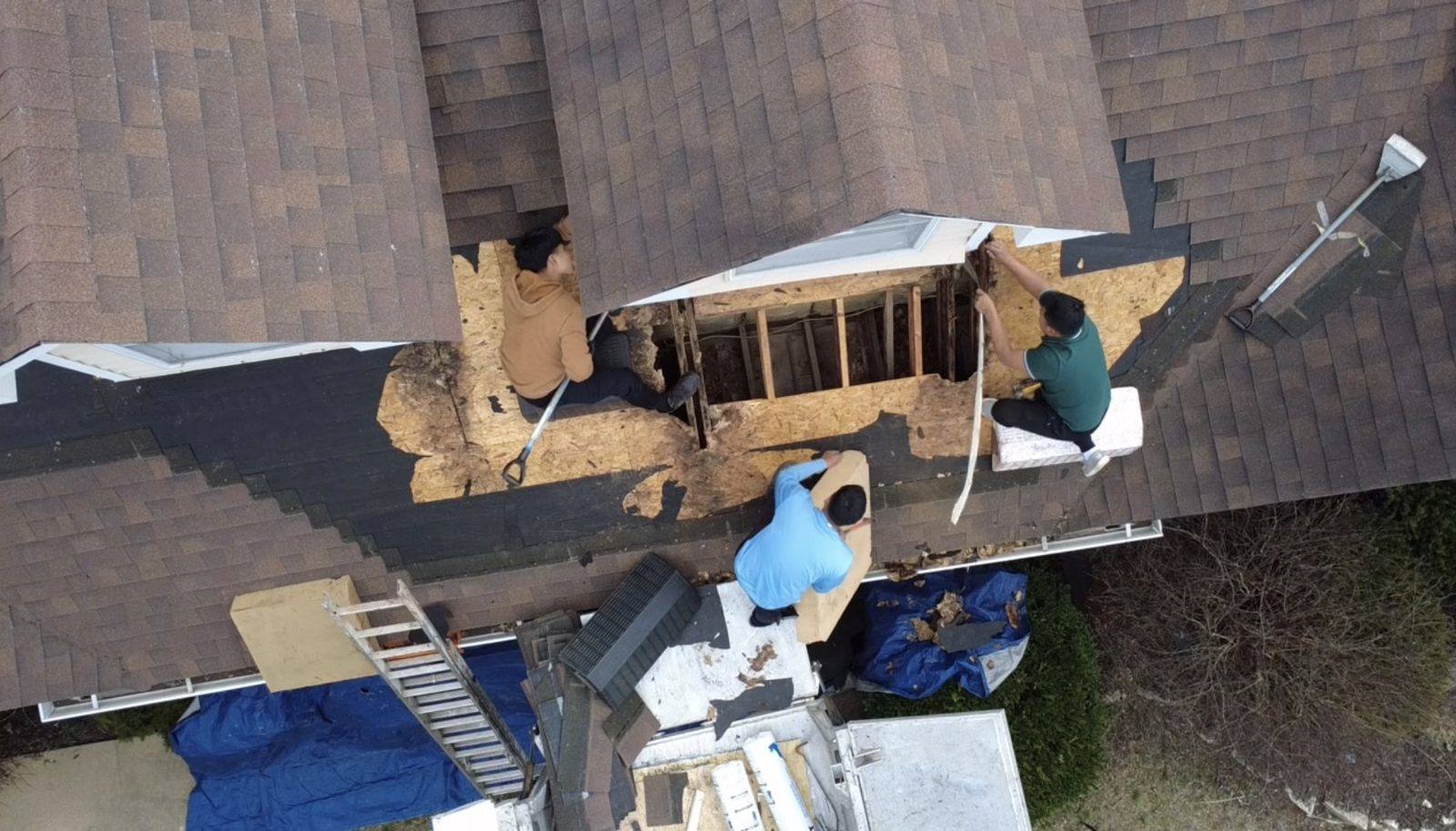
When we strip the old roof and find soft or rotten plywood across the deck, a layover or a patch would just trap the rot. Replacing the decking and the roof together is the only fix that lasts. We show you every bad sheet before we cover it.
- Insurance approves it
If hail or wind caused widespread damage and your adjuster approves a full replacement, your cost drops to your deductible. At that point a replacement is usually the clear financial winner over a repair you pay for out of pocket.
Why a layover is almost never the cheap shortcut it looks like
Some roofers offer to lay a new layer of shingles over the old one to save the cost of a tear-off. It looks cheaper, and on rare, very specific roofs it is acceptable. In nearly every case, though, a layover is a mistake. It hides the rotten decking and failed fascia that are usually the real story in this climate, it voids most manufacturer warranties, and it doubles the weight on a structure that may already be stressed.
Worse, a layover quietly skips the diagnosis. The only way to know what the storms and freeze-thaw have actually done to your roof is to tear off and look at the deck. That is why our standard quote is a complete tear-off down to the wood. We would rather show you a soft sheet of plywood and replace it than cover it back over and let it leak in two winters.
Repair or Replace Your Roof: common questions
Get an honest repair-or-replace inspection
A real Emmendorfer walks your roof and tells you straight whether it is a repair, a replacement, or fine to leave for now. Free and no obligation across Franklin County.
- We walk your actual roof before we quote it
- The manufacturer is named on your written estimate
- The price you approve is the price you pay
- Tom handles your insurance claim start to finish