
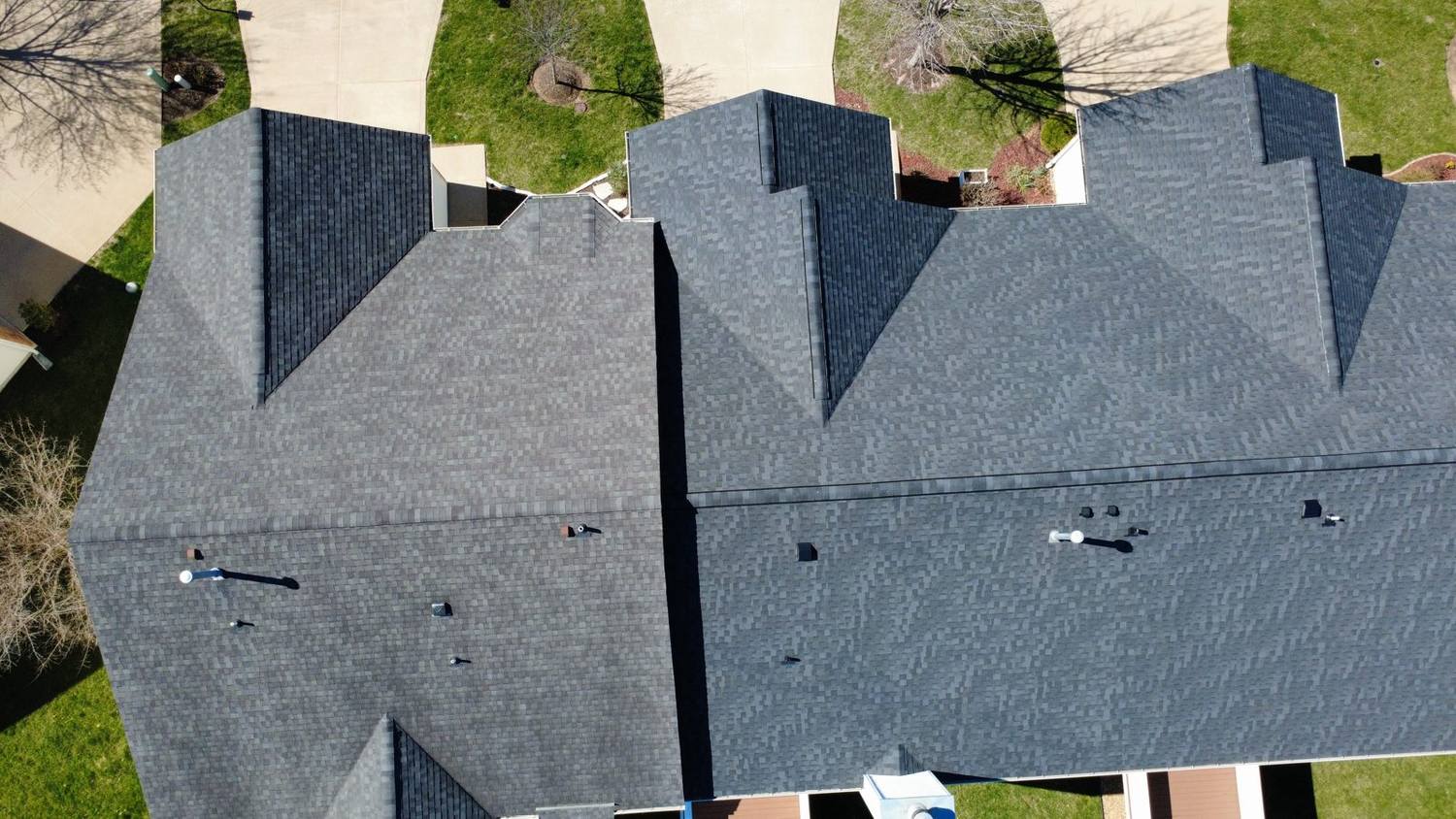
Balanced Attic Ventilation for Franklin County Roofs
Most Franklin County homeowners never look in their attic until a roof problem shows up. By then the ventilation has often been working against them for years. A roof breathes through two openings: intake low at the soffits and exhaust high at the ridge. When those two sides are matched, the attic stays dry and close to outdoor temperature. When they are not, you get cooked shingles in July and ice dams in January.
This guide explains how balanced ventilation actually works, why it matters for shingle lifespan in our Missouri climate, and the real signs your attic is starved for air. Emmendorfer Exteriors has roofed more than 2,400 homes around Union, Washington, Pacific, and the rest of Franklin County since 1990, and bad ventilation is one of the most common hidden problems we find.
What balanced ventilation actually means
Balanced ventilation is a simple equation. You need roughly the same amount of intake at the bottom of the roof as exhaust at the top. Cool outside air enters through soffit vents under your eaves, rises as it warms, and pushes out through a continuous ridge vent at the peak. That steady flow keeps the attic near outdoor temperature instead of trapping heat and moisture.
The standard target is usually one square foot of net free vent area for every 300 square feet of attic floor, split evenly between intake and exhaust. The split matters more than the total. An attic with plenty of ridge vent but blocked soffits cannot pull air through, so the ridge ends up drawing conditioned air out of the house instead of fresh air from outside.
Net free area is the real measurement, not the size of the vent opening. A vent with screens and baffles passes far less air than its physical size suggests. Matching intake to exhaust by net free area, not by eyeballing the openings, is what makes the system work the way it should.
Why balance protects shingle lifespan
Asphalt shingles age fastest from heat. On a Franklin County summer day a poorly vented attic can run 140 degrees or hotter, baking the underside of your deck and shingles. That heat dries out the asphalt, curls edges, and ages shingles years ahead of schedule. A balanced attic that vents continuously stays far cooler and lets shingles reach the lifespan you paid for.
Heat is also why most shingle manufacturers tie their warranties to proper ventilation. Owens Corning, GAF, CertainTeed, and Malarkey all expect a balanced intake-and-exhaust system. Skip it and a denied warranty claim can land on you. Emmendorfer is Owens Corning certified, so we set ventilation to the standard that keeps your coverage intact.
The fix is rarely complicated. On most replacements we add or clear soffit intake and run a continuous ridge vent across the peak, then verify the two sides are matched. Done right during a roof replacement, balanced ventilation adds little to the job and pays back in years of added shingle life.
Ice dams: the winter cost of bad airflow
Ice dams form when a warm attic melts the snow on your upper roof. That meltwater runs down to the cold eaves, refreezes, and builds a ridge of ice. Water backs up behind the dam, works under the shingles, and leaks into the ceilings and walls. It is one of the most common winter roof failures we see across Washington, Union, and St. Clair.
A balanced attic keeps the roof deck close to outdoor temperature, so snow stays frozen instead of melting and refreezing at the edge. Soffit intake at the eaves is the piece people forget. When insulation or paint has plugged the soffits, the cold eave never gets fresh air and ice dams form even with a good ridge vent.
Ventilation works alongside insulation and air sealing, not instead of them. If you are seeing icicles and water stains every winter, the attic usually needs all three checked together. We look at the full picture during an inspection rather than throwing one part at the problem.
Summer heat, energy bills, and moisture
In summer a trapped attic turns into an oven sitting on top of your living space. That heat radiates down through the ceiling, runs your air conditioner harder, and pushes up your electric bill all season. A balanced system lets the hottest air escape at the ridge continuously, so the attic and the rooms below stay easier to cool.
Moisture is the quieter problem. A household typically puts off gallons of water vapor a day from showers, cooking, and laundry. Without exhaust, that vapor collects in a cold attic and condenses on the underside of the deck. Over time you get damp insulation, rusted nail tips, rotting sheathing, and mold that spreads before anyone notices.
Balanced ventilation carries that moisture out before it condenses. It protects the wood structure of your roof, keeps insulation dry and effective, and stops the mold problems that show up as musty smells and dark staining on the attic sheathing.
Signs your attic is under-ventilated
You can spot a lot from inside. Climb into the attic on a hot day and feel for stale, oven-like heat instead of moving air. Look for dark staining, frost, or rust on the underside of the deck and on the nail tips. Damp or matted insulation and a musty smell all point to trapped moisture and weak airflow.
From the ground, watch the roof through the seasons. Curling or blistering shingles that are aging unevenly, ice dams and heavy icicles at the eaves in winter, and a top floor that never cools off in summer are all ventilation symptoms. Mold near the ceiling line or peeling paint on the soffits is another common tell.
If two or three of these sound familiar, the attic is likely starved for intake, exhaust, or both. The only way to know for sure is to get up on the roof and into the attic and measure. That is exactly what we check on every inspection, and we tell you straight whether ventilation is the real issue.
How Emmendorfer fixes ventilation the right way
We start by measuring the attic and comparing actual intake to actual exhaust instead of guessing. From there we clear or add soffit vents, install baffles so insulation does not choke the airflow, and run a continuous ridge vent across the peak. The goal is a matched system that pulls air from eave to ridge the way it should.
Our crews are in-house family crews, not subcontractors, and have been since Matt Emmendorfer started the company in 1990. The same people who measure the attic install the vents, so nothing gets lost in a handoff. We install Owens Corning, CertainTeed, GAF, and Malarkey systems and set ventilation to keep those warranties valid.
If the ventilation problem ties into storm or hail damage, Tom Emmendorfer meets the insurance adjuster on the roof from start to finish so nothing legitimate gets missed. Every job ends the same way. We magnet-sweep the whole site for nails before we leave, so your yard is safe for kids, pets, and tires.
Attic Ventilation: common questions
Get a free on-roof attic ventilation check
If your top floor cooks in summer or you fight ice dams every winter, the attic is worth a real look. Emmendorfer will get on the roof, check intake and exhaust, and give you a straight written estimate at no cost. Call (314) 568-4163 to book your inspection across Union and Franklin County.
- We walk your actual roof before we quote it
- The manufacturer is named on your written estimate
- The price you approve is the price you pay
- Tom handles your insurance claim start to finish