
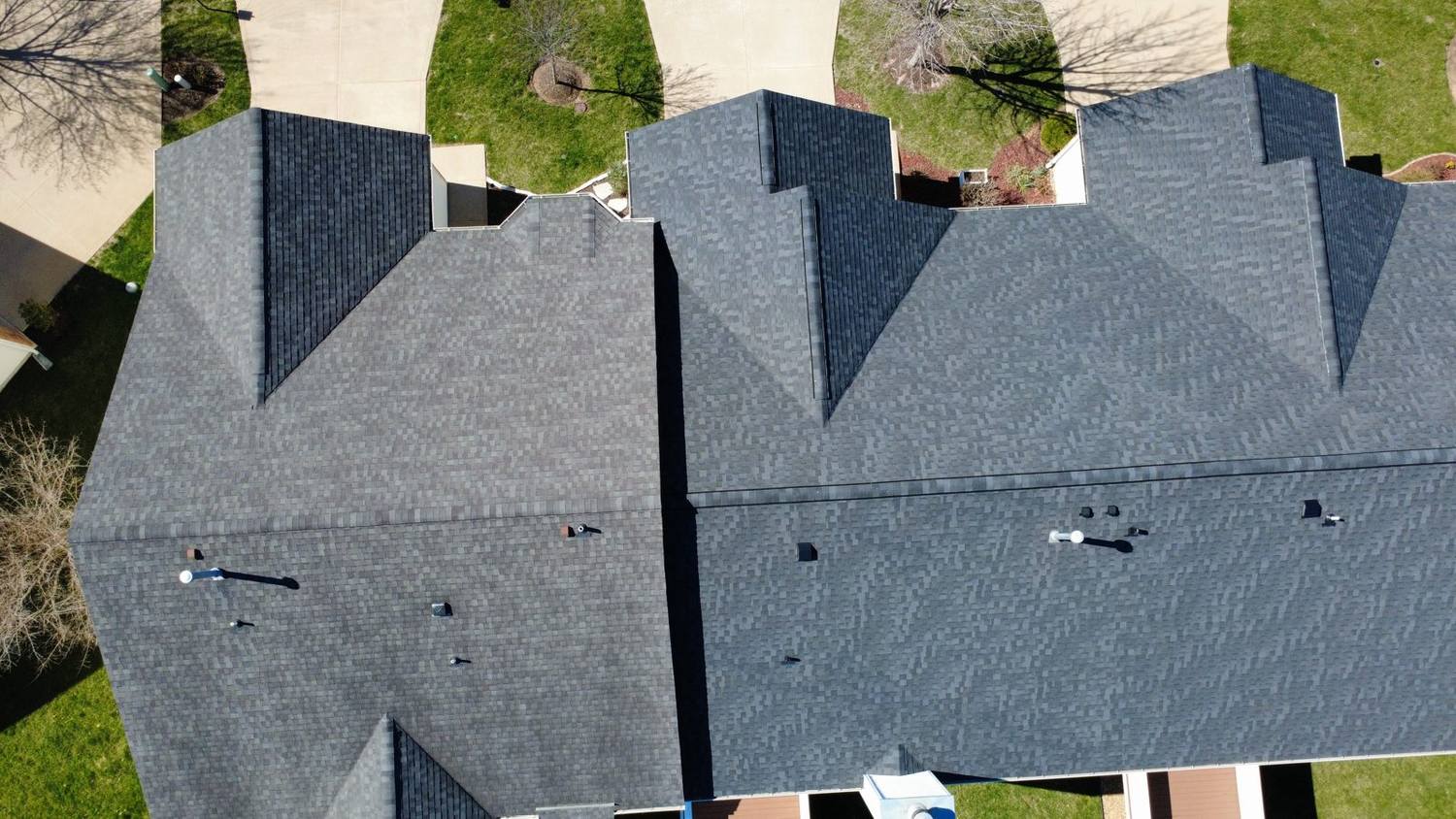
Chimney and Roof Flashing Repair in Franklin County, MO
If your roof leaks near a chimney, skylight, or vent pipe, the shingles are almost never the problem. The flashing is. Flashing is the thin metal that seals every spot where your roof meets something it cannot shingle over, and it is the number-one source of roof leaks in Franklin County homes.
This guide walks through how each type of flashing works, why it fails, the warning signs inside your house, and what an honest repair actually looks like. Emmendorfer Exteriors has roofed 2,400-plus Missouri homes since 1990 with in-house family crews, so we see flashing failures every week across Union, Washington, Pacific, and the rest of the county.
Why flashing causes most roof leaks
Shingles shed water across a flat field of roof, but they cannot seal a corner, a wall, or a hole. Anywhere your roof changes direction or something pokes through it, water needs a metal channel to guide it back onto the shingles. That metal is flashing, and it lives at chimneys, sidewalls, skylights, valleys, and vent pipes.
Those transition points take the most stress. Sun, freeze-thaw cycles, and a settling chimney work the metal loose long before the shingles wear out. So a roof with ten good years left will still leak at the chimney. That is why a leak almost always traces back to flashing, not the shingle field around it.
The fix is rarely a whole new roof. A flashing leak caught early is a targeted repair. Ignored, the water rots decking and framing under the chimney, and a one-day repair turns into a structural one. Catching it early is the whole game.
Step flashing and counter-flashing explained
A chimney needs two layers of metal working together. Step flashing is a series of L-shaped pieces woven in with each course of shingles up the side of the chimney. Each piece laps the one below it, so water steps down and out instead of finding the seam. One bent or missing step piece is enough to leak.
Counter-flashing is the second layer. It tucks into a cut groove in the brick or mortar and laps over the top of the step flashing, sealing the gap from above. Done right, the brick cap protects the seam for decades. The wrong way is a bead of caulk or tar smeared over the joint, which dries, cracks, and fails in a couple of seasons.
When you see black roof tar packed around a chimney, that is a red flag. It means someone patched a flashing problem instead of fixing it. A proper repair pulls the old metal, installs new step and counter-flashing, and seals it into the masonry so the joint sheds water on its own.
Chimney crickets and saddles
A wide chimney, typically anything over about 30 inches across, needs a cricket. A cricket, also called a saddle, is a small peaked structure built on the up-slope side of the chimney. It splits water and debris and sends them around both sides instead of letting them pile against the brick.
Without a cricket, water and wet leaves dam up behind a wide chimney. That standing water works under the flashing and rots the decking, and in a Missouri winter the freeze-thaw pries the seam open faster. A lot of older Franklin County homes were built without one, and that back wall is exactly where they start leaking.
Adding a cricket during a flashing repair or a roof replacement is a permanent fix for that problem. We frame it, deck it, and flash it as part of the system, so the most vulnerable side of your chimney finally drains the way it should.
Skylight and vent-pipe flashing
Skylights are leak-prone because they combine a frame, glass, and flashing on a sloped surface. Most skylights use a head, sill, and step flashing kit, and the seal under the curb can fail even when the glass is fine. If you see staining on the drywall around a skylight, the flashing or the gasket is usually the cause, not the window.
Vent pipes use a rubber boot, a flat flange under the shingles with a collar that hugs the pipe. The flange almost never fails. The rubber collar does. Missouri sun bakes it brittle in roughly eight to twelve years, it cracks, and water runs straight down the pipe into the attic.
A failed pipe boot is one of the cheapest leaks to fix and one of the most common we find. We replace it with a new boot, or a metal-and-rubber unit that outlasts the all-rubber kind, and re-weave the shingles so the new flange sits under them the way it should.
What a proper flashing repair looks like
A real repair starts on the roof, not from a ladder. We lift the surrounding shingles, remove the failed metal, and inspect the decking underneath for rot. If the wood is soft, it gets replaced before any new flashing goes down, because new metal over rotten decking just hides the next leak.
Then we install new flashing the right way for that joint: woven step flashing, counter-flashing cut into the masonry, a new pipe boot, or a cricket where the chimney needs one. We re-lay the shingles over the new metal and seal only where sealant belongs, not as the fix itself. No tar smeared over a bad joint.
Every job ends with a magnet sweep of the whole site for nails, so your yard, driveway, and tires stay safe. Because our crews are in-house family rather than subcontractors, the same Owens Corning certified standard holds whether it is a single pipe boot or a full chimney re-flash.
When flashing damage is an insurance claim
Wind and hail damage flashing the same way they damage shingles. A storm can lift counter-flashing out of the mortar, dent metal, or tear a pipe boot. When that happens, the repair may be covered, and it pays to have it looked at before you file or settle.
Tom Emmendorfer handles the insurance side and meets your adjuster on the roof, start to finish. Being up there together means the flashing damage gets documented properly instead of getting missed or written off as wear. Amy shoots drone photos so the whole roof is on record before anyone signs off.
If your leak started after a storm, do not assume it is just age. Get it inspected, get it documented, and let us walk the claim with you. See our storm damage and insurance claim guides for how the process works in Missouri.
Chimney Flashing: common questions
Get your flashing inspected before the next leak
If your roof leaks near a chimney, skylight, or vent pipe, Emmendorfer Exteriors will get on the roof, find the real cause, and hand you a written estimate, no phone guesses. Call (314) 568-4163 to book a free on-roof inspection across Union, Washington, Pacific, and all of Franklin County.
- We walk your actual roof before we quote it
- The manufacturer is named on your written estimate
- The price you approve is the price you pay
- Tom handles your insurance claim start to finish