
Finding and Fixing Roof Leaks in Franklin County, MO
A brown ring on the ceiling feels like an emergency, and it is worth taking seriously, but the spot you see is almost never above the hole. Water gets in at a high point, runs down the wood or the felt, then drops where a seam or a light fixture stops it. Chase the stain and you patch the wrong shingle. Find where the water actually enters and the fix is usually small.
This guide walks through where Franklin County roof leaks really start, the signs that point to each cause, how we trace one back to its source on the roof, and when a leak is a simple repair versus a sign the roof is done. We have run in-house family crews since 1990 across Union, Washington, Pacific, St. Clair, Sullivan, Villa Ridge, and New Haven, so the patterns below come from real roofs here.
Where roof leaks actually start (rarely over the stain)
Water follows the path of least resistance, not gravity in a straight line. It enters at a penetration or a seam, then travels along the underside of the decking or down a rafter until something stops it. That is why a stain in the middle of a bedroom often traces back to a pipe boot or a valley several feet uphill. The visible damage marks where water left the roof system, not where it got in.
The usual entry points are predictable. Cracked pipe boots, failed flashing where the roof meets a wall or dormer, open valleys where two roof planes shed into each other, popped or backed-out nails, and worn flashing around chimneys and skylights cause the large majority of leaks we find. The open field of plain shingles, away from any penetration, is the least likely place for a roof to leak.
Because the entry point and the stain can sit feet apart, a homeowner with a garden hose and a guess usually patches the wrong area. The leak comes back with the next hard rain, the patch gets blamed, and the real source keeps soaking the decking. Finding the true entry point first is the whole job, and it is the step most patch jobs skip.
Pipe boots, popped nails, and the small failures behind most leaks
The single most common leak we find is a failed pipe boot. That is the rubber or neoprene collar sealing the plumbing vent pipes that stick through your roof. The rubber dries, cracks, and splits in the Missouri sun, often within ten to fifteen years, and water runs straight down the pipe into the attic. The shingles around it can look perfect. The boot is the failure, and replacing one is a quick, inexpensive fix.
Popped nails are the next usual suspect. As decking expands and contracts through Franklin County freeze-thaw cycles, nails back out and lift the shingle above them. The nail head then sits proud under the shingle and wicks water through the hole it left. You sometimes spot it as a small raised bump in an otherwise flat shingle course. Reseating or replacing that fastener and sealing the shingle stops it.
Exposed or face-nailed fasteners, loose ridge cap, and a single wind-lifted shingle round out the small stuff. None of these mean the roof is failing. They mean one component needs attention. The trick is catching them before the decking underneath rots, which turns a low-cost fix into a structural repair that opens up framing and insulation.
Dormer and valley leaks: where two roofs meet
Valleys carry more water than any other part of the roof because two planes drain into one channel. When the metal or woven shingle in that valley wears, or debris dams up and forces water sideways under the shingles, you get a leak that often shows up well down the slope or on an interior wall. Valleys are high-volume, high-stress areas, and a tired valley is a frequent source of stubborn, recurring leaks.
Dormers leak because they pack sidewall, headwall, and valley flashing into one tight space. The flashing where the dormer wall meets the roof, and the step flashing tucked behind the siding, has to be layered correctly or water finds the gap. A dormer leak often shows as a stain on the ceiling or wall inside that dormer, several feet from where the flashing actually failed, so the source hides from a quick look.
These are the leaks someone patches three times while chasing the stain. The fix is not more caulk. It is correcting the flashing detail so the water sheds the way it was meant to. Done right, a dormer or valley repair holds for years. Done with sealant alone, it buys a season at most before the same stain comes back.
How we trace a leak back to its source
We start inside. The stain, the attic, and the daylight pattern tell us roughly where water is landing, and we follow the wet wood uphill from there. Water leaves a track on the underside of the decking and along the rafters, and that track points back toward the entry point far more reliably than the ceiling spot does. Tom or one of the family crew reads that path before anyone touches a shingle.
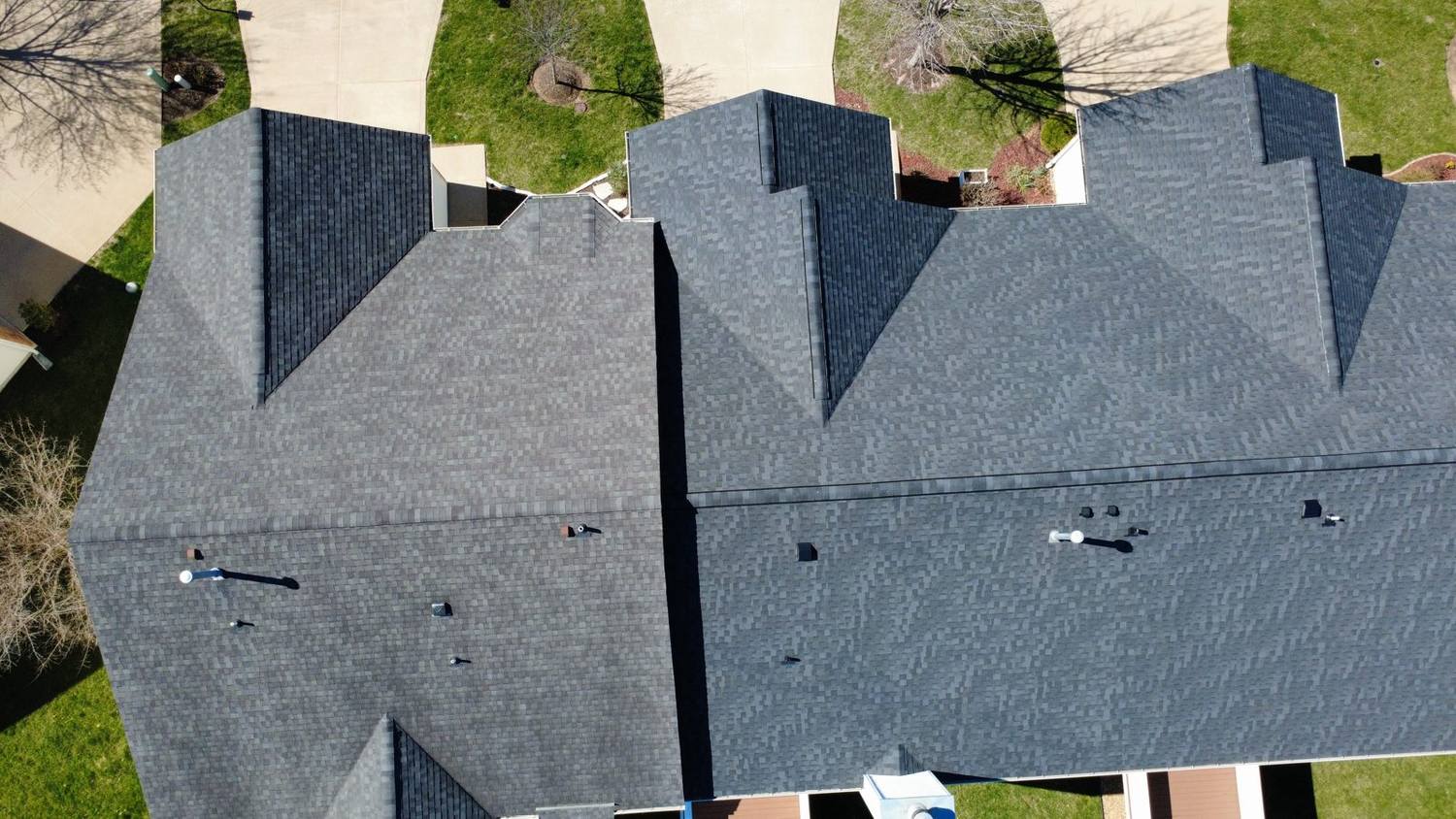
Then we get on the roof and inspect the suspects in order: pipe boots, valleys, every wall and dormer flashing, the chimney, skylights, and the fastener pattern across the field. Amy runs the drone for the steep and high sections and for close-up photos of the failure, so you see exactly what we found instead of taking our word for it. We confirm the real source before we quote the fix.
Finding the entry point is the part that separates a repair that holds from one that comes back next rain. When we finish any work, we magnet-sweep the whole job site for nails, so your yard and driveway are clean for kids, pets, and tires. That cleanup is standard on every job we run, not an add-on we charge for later.
Repair or replace: which one a leak signals
Most leaks are repairs, not replacements. A single failed boot, a worn valley, one bad flashing, or a few popped nails on an otherwise sound roof is a targeted fix. If the shingles still have years of life, the decking under the leak is solid, and the failure is isolated to one component, repairing the source is the right call and the honest one.
A leak signals replacement when the failures are no longer isolated. Widespread popped nails, several boots and flashings failing at once, granules filling the gutters, brittle or curling shingles, and soft or rotted decking across more than a small area mean the roof has reached the end of its service life. At that point repairs turn into whack-a-mole, and the money is better spent once.
Age matters too. A leak on a four-year-old roof is almost always a workmanship or component issue worth repairing. A leak on a twenty-five-year-old three-tab roof is usually the first of many. We tell you straight which one you have, and if a repair is the answer we are not going to talk you into a replacement you do not need.
What a roof leak repair usually costs
Most single-point leak repairs run a few hundred dollars, not thousands. A pipe boot replacement, reseating popped nails, or sealing a single flashing detail typically lands in the low hundreds. A worn valley, dormer flashing rebuild, or chimney flashing repair runs higher because there is more labor and detail work, but it stays a fraction of a full replacement. The exact number depends on access, pitch, and how much decking the water already damaged.
The cost that hurts is the one you put off. A small boot leak left for two more rainy seasons rots the decking, soaks insulation, and can reach drywall and framing, turning a quick repair into a structural job. The cheapest leak is the one fixed early. We give you a written number after we confirm the source, and the price you approve is the price you pay.
If a repair will not hold because the roof is genuinely worn out, we say so and show you the photos behind that call. Tom handles the insurance side when storm damage is involved, meeting your adjuster on the roof from start to finish so the claim reflects what is actually up there. Either way you get a real answer, not a sales pitch.
Roof Leak Repair: common questions
Found a stain? Let a real Emmendorfer trace it
We find where the water actually enters, fix the source, and magnet-sweep the yard when we leave. Free on-roof inspection and a written estimate across Franklin County. Call (314) 568-4163.
- We walk your actual roof before we quote it
- The manufacturer is named on your written estimate
- The price you approve is the price you pay
- Tom handles your insurance claim start to finish