
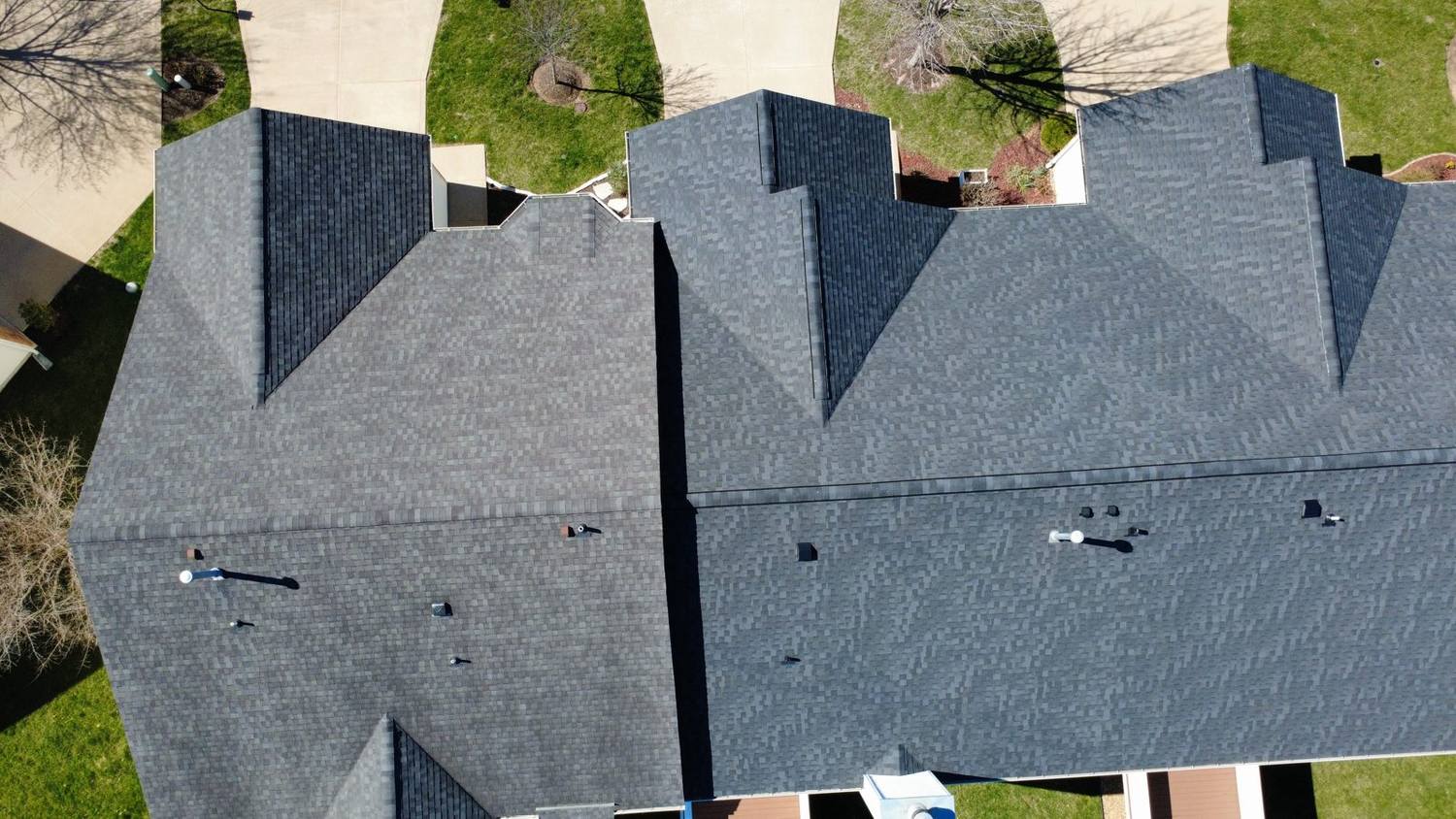
Roofing Codes and Permits in Franklin County, MO
Roofing code is not paperwork for its own sake. Every line of it exists because a roof somewhere in Missouri failed in a way that was preventable. The ice-and-water shield rule comes from frozen eaves backing water under shingles. The nail-pattern rule comes from decks peeling off in straight-line wind. This guide walks the codes and permits that actually apply to a Franklin County reroof, in plain language, so you know what a correct install looks like before anyone climbs your ladder.
Permits and inspections in Franklin County are handled at the city level, so Union, Washington, Pacific, and St. Clair each run their own building office, while homes out on county acreage may fall under different oversight again. The contractor you hire should pull the permit, build to the adopted code, and stand for the final inspection. Emmendorfer Exteriors has roofed around 2,400 Missouri homes since 1990 with in-house family crews, so the standards below are how we build whether an inspector is watching or not.
Do you need a permit to reroof in Franklin County?
For a full tear-off and replacement, almost always yes. Most Franklin County cities require a building permit for a reroof because the work touches the structure and the weather barrier of the home. Union, Washington, and Pacific each run their own building department, so the exact form, fee, and inspection steps depend on which city your address sits in. A repair of a few shingles usually does not need one, but a tear-off does.
The permit is not yours to chase. A registered roofer pulls it under their own contractor registration, schedules any required inspection, and is the name on file if something fails. If a storm-chasing crew tells you to pull your own homeowner permit so they can start tomorrow, treat that as a red flag. It puts the liability on you and signals they are not registered to work in your city.
Permits also protect the next sale of your home. An unpermitted roof can surface during a real estate inspection and stall a closing, because there is no record an inspector ever confirmed the work met code. Pulling the permit costs a small fee and a day or two of lead time. Skipping it can cost you a buyer.
Ice-and-water shield at the eaves and valleys
Missouri winters freeze the bottom edge of a roof while the deck above stays warmer, and meltwater refreezes into an ice dam at the eave. Water then backs uphill under the shingles, past the felt, and into the wood. Ice-and-water shield is a self-sealing membrane that bonds to the deck and seals around nail shanks, so even when water gets driven backward it cannot reach the decking. Code requires it at the eaves in our climate.
The eave coverage rule is specific. The membrane has to run from the edge up the slope far enough to reach a set distance past the inside of the exterior wall line, which on most homes means the first three feet of shingle area, and more on a low pitch. We also run ice-and-water in the valleys and around penetrations, because valleys carry the most concentrated water on any roof and chimneys and skylights are where leaks start.
A crew skipping ice-and-water to shave cost is invisible the day the roof goes on and obvious the first hard winter. You cannot see it once the shingles cover it, which is exactly why it gets cut on a low bid. Ask any contractor in writing where the membrane goes. On an Emmendorfer install it runs the eaves, the valleys, and every penetration as standard, not as an upsell.
Decking nailing, drip edge, and the edge details inspectors check
The deck is the structural skin the whole roof depends on, and code dictates how it fastens down. Plywood or OSB decking has to be nailed to the rafters or trusses on a set pattern, typically along every support at a fixed spacing, because that grid is what keeps the sheet from peeling in the straight-line winds that hit Franklin County every storm season. If we tear off and find decking that was stapled or under-nailed, we refasten it to code before a single shingle goes down.
Drip edge is the metal flashing along the eaves and rakes, and current code requires it on every edge of the roof. It directs runoff into the gutter instead of behind the fascia, and it gives the shingle edge a clean, wind-resistant line to seal against. A roof without drip edge rots the fascia and the deck edge from the outside in, and it is one of the first things a building inspector looks for on a final.
Edges are where roofs fail first and where cheap installs cut corners. Starter strip at the eaves and rakes, correct shingle overhang, and properly lapped drip edge are small details that decide whether your roof holds in an 80 mph gust. None of them add real cost on an honest install. They just take a crew that builds to the code instead of building to the clock.
Roof ventilation code: balanced intake and exhaust
A roof has to breathe or it cooks itself. Code sets a minimum ventilation ratio, commonly one square foot of net free vent area for every 150 square feet of attic floor, and that vent area has to be split roughly half low and half high. Intake comes in at the soffits along the eaves, exhaust leaves at or near the ridge, and the airflow between them carries out heat and moisture. Get the balance wrong and the system stalls.
Most ventilation problems in older Franklin County homes are imbalance, not absence. A house with ridge vent but blocked or painted-over soffit intake cannot pull air, so the ridge vent does nothing and the attic bakes. Trapped summer heat ages shingles from underneath and voids manufacturer warranties. Trapped winter moisture condenses on the deck and rots it. We check intake and exhaust together, because adding exhaust without intake makes the problem worse.
Manufacturers like Owens Corning, GAF, CertainTeed, and Malarkey tie their shingle warranties to correct ventilation, so this is not just a code item, it is a warranty item. As an Owens Corning certified contractor we install the ventilation the system spec calls for, which keeps both the inspector and the warranty satisfied. A roof vented to code lasts the years the shingle was rated for instead of failing early.
Truss and load basics: why you cannot just stack a roof
The roof structure under your shingles is engineered to carry a specific load, and code treats that structure as off-limits to casual changes. Roof trusses are a designed system of members held in tension and compression, and cutting, drilling, or notching one member can transfer load in a way the truss was never built for. If a roof job involves altering a truss, that is an engineering decision and a permit item, not a field call.
Dead load and live load both matter to your reroof. Dead load is the permanent weight of the roof system itself, and it is why code in most Franklin County cities limits how many layers of shingle a roof may carry, usually capping it at two. A third layer can overload the structure and is one more reason we quote a full tear-off rather than a layover. Live load is the temporary weight of snow, ice, and a working crew, and the structure is sized for it only if it stays intact.
This is where an in-house crew matters. A roofer who has been on Franklin County structures since 1990 reads the framing on a tear-off and flags a cracked truss, a sagging ridge, or a deck that was never built for the load it carries. A subcontracted crew paid by the square has no reason to slow down and look. We do, because the same family name is on the permit and on the warranty.
Codes & Permits: common questions
Get a code-correct roof and a free on-roof inspection
A real Emmendorfer walks your actual roof, pulls the permit, builds to Franklin County code from the deck up, and magnet-sweeps every nail before we leave. Call (314) 568-4163 for a free inspection and written estimate across Union, Washington, Pacific, and the rest of the county.
- We walk your actual roof before we quote it
- The manufacturer is named on your written estimate
- The price you approve is the price you pay
- Tom handles your insurance claim start to finish