
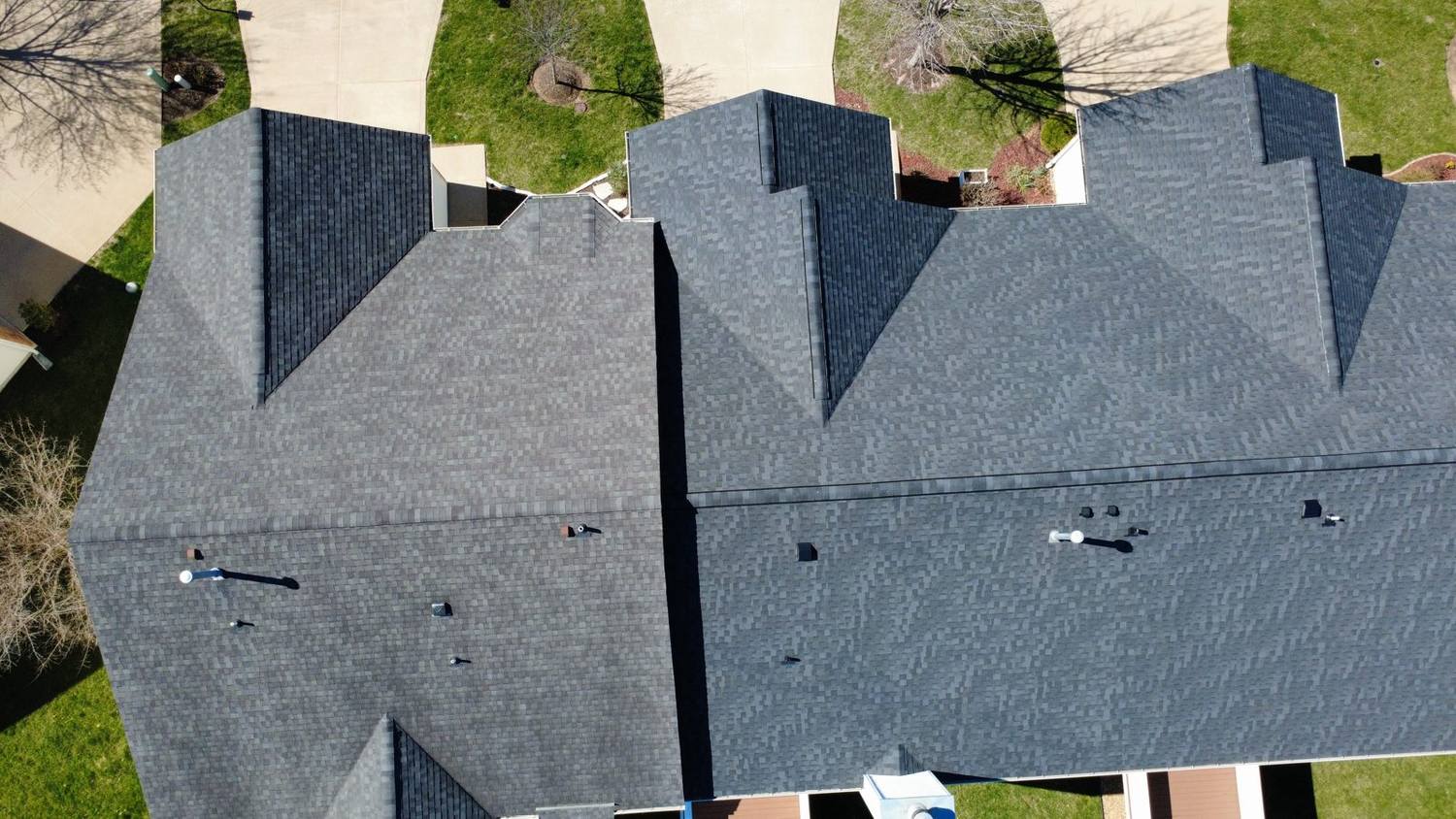
Asphalt Shingle Problems and Repair: A Franklin County Guide
Asphalt shingles fail in patterns, and once you know what each pattern means, you can tell a five-minute fix from a roof that is quietly done. This guide walks through the problems we see most on Union, Washington, and Pacific homes: curling, cupping, blistering, cracking, thermal splitting, granule loss, and wind blow-offs. For each one we tell you whether it is repairable or a sign the whole roof needs to go.
Emmendorfer Exteriors has read these signs on more than 2,400 Missouri roofs since 1990. Our in-house family crews are on roofs in Franklin County every week, so we are not guessing from the driveway. The honest answer is often a repair, and we will tell you when that is the case instead of pushing a roof you do not need yet.
Curling and cupping: usually the roof telling you it is old
Curling is when the edges or corners of a shingle lift up and pull away from the roof. Cupping is when the center dishes down while the edges stay put. Both come from the same place. The asphalt has dried out and the shingle has lost the flexibility it had when it was new. Years of Franklin County summer heat and freeze-thaw cooking drive that flexibility out slowly.
When curling or cupping shows up on one or two shingles, we can usually swap them out. When it shows up across whole slopes, the roof is near the end of its service life and no repair reverses that. Curled shingles also catch wind, so a roof that is widely curling is one storm away from losing shingles. That is your signal to plan a replacement, not patch.
Watch where it starts. South and west slopes take the most sun in eastern Missouri and curl first. If those faces are curling and the north slope still lies flat, you are usually watching a roof in its final few years rather than one that needs replacing tomorrow. A walk of every slope tells us how far along the whole roof actually is.
Blistering, cracking, and thermal splitting
Blistering looks like small raised bubbles on the shingle surface, sometimes popped open with the granules gone. It comes from moisture trapped in the shingle during manufacturing or from a hot, poorly ventilated attic baking the roof from below. A few blisters are cosmetic. Widespread blistering with the asphalt exposed means the shingles are wearing fast and the field is getting fragile.
Cracking and thermal splitting are different animals. Cracks are random splits from age and brittleness. Thermal splitting is a straight tear, often vertical, that happens when shingles expand in heat and contract in cold until they pull themselves apart. Both let water reach the mat and the deck. Isolated cracks can be sealed or the shingle replaced. Splitting across the field usually means the roof is done.
Ventilation is often the hidden cause behind early blistering and splitting. When an attic runs hot because intake and exhaust vents are wrong or blocked, shingles age years faster than they should. We check the attic and ventilation as part of every inspection, because fixing a roof without fixing why it cooked is half a job and the new shingles will just cook too.
Granule loss: reading your gutters
Granules are the colored mineral coating that shields the asphalt underneath from the sun. As a roof ages, those granules let go and wash into the gutters. A little granule loss on a new roof is normal break-in. Heavy granule piles in multiple downspouts, with bald black or shiny patches showing on the shingles, is the roof shedding its sunscreen, and bare asphalt fails fast once it is exposed.
Where the granules sit tells you a lot. Loss isolated to one downspout under a storm-hit slope can point to a repairable section. Heavy loss across every downspout points to a roof aging out everywhere at once. Hail also knocks granules loose in round bruise marks, which is a storm-damage pattern an adjuster can cover rather than normal wear.
Shiny dark spots you can see from the ground are asphalt with no granules left on it. Scattered spots may be repairable. Shiny patches across whole slopes mean the protective layer is gone over most of the roof, and that roof is on borrowed time no matter how good it looked from the curb last year. Once the asphalt bakes uncovered, the failure speeds up.
Wind blow-offs after a storm
Missouri storms peel shingles off, and a few missing shingles on one slope is one of the most common repairs we do. If the rest of the roof is sound and reasonably young, we replace the missing shingles, reseal the surrounding tabs, and the roof goes back to weathertight. On small jobs we often get a house back under the dry the same visit while we are already up there.
The trouble comes when wind lifts shingles that do not blow all the way off. A shingle that broke its seal and flapped back down looks fine from the ground but is no longer bonded, so the next gust takes it and water gets in behind it. After any real storm it is worth having someone walk the roof and check seals, not just count the shingles that are obviously gone.
Repeated blow-offs across several storms usually mean the sealant strips have given up across the whole roof, which is an age problem, not a one-slope problem. One blow-off is a repair. A roof that loses shingles every time the wind picks up is telling you it is at the end. Tom can also tell you whether wind damage is a claim worth filing.
Matching shingle color on an older roof
The hardest part of any shingle repair is color. Asphalt shingles fade as they weather, so a brand-new shingle almost never matches a roof that has baked in the Franklin County sun for ten years, even when it is the exact same product and color name. A fresh patch can sit a shade or two off until it weathers in, which it usually does over a season or two.
We pull the closest current match from the same manufacturer wherever we can. As Owens Corning certified installers who also install CertainTeed, Malarkey, and GAF, we have real color options to work from rather than whatever one supplier happens to have on the shelf. On a visible front slope we tell you honestly how close the match will get before we do the work.
Sometimes the smart move is taking shingles off a hidden slope, like a back or garage face, to patch the visible front, then putting the new shingles where nobody sees them. It is more labor, but on a roof with several good years left and a fussy front elevation, it keeps the curb appeal while you get the full life out of the roof. We lay out the options and let you choose.
Shingle Problems & Repair: common questions
Not sure if it is a fix or a new roof? We will tell you straight.
A real Emmendorfer walks every slope, reads the curling, cracking, and granule loss, and gives you a written estimate and an honest answer on repair versus replace. Free across Franklin County. Call (314) 568-4163. We magnet-sweep the whole job site for nails when we are done.
- We walk your actual roof before we quote it
- The manufacturer is named on your written estimate
- The price you approve is the price you pay
- Tom handles your insurance claim start to finish