
How a Roof Inspection Works in Franklin County, MO
Most roof problems in Franklin County start small and stay hidden. A handful of cracked shingles, a lifted flashing, a nail pop the size of a dime. None of it shows from the kitchen window, and none of it leaks the day it happens. By the time a brown stain appears on the ceiling, water has usually been in the deck for months. A real inspection finds the problem in the dry season, not the storm season, and that is the whole point of doing one.
This guide covers what you can safely check yourself from the ground and the attic, what a roofer looks for once they are on the roof, how a post-storm inspection feeds an insurance claim, and where thermal imaging finds moisture the eye cannot. Emmendorfer Exteriors has roofed more than 2,400 Missouri homes since 1990 with in-house family crews, so the checklist below is what we actually look at on a Union or Washington roof, not a generic list.
What a roof inspection actually checks for
A roof inspection is a top-to-bottom read of the system that keeps water out of your house. That means the shingles, the flashing around chimneys and vents, the valleys where two slopes meet, the ridge and the eaves, the gutters, and the decking and underlayment beneath. The inspector looks for storm damage, age-related wear, and any spot where the waterproof layer has been broken or is about to break.
The goal is not to find one big hole. It is to catch the small stuff early. Hail bruises that have not opened yet, wind-lifted tabs that broke the seal strip, a chimney flashing that has pulled away a quarter inch, granules collecting in the gutter. Any one of those can turn into a winter leak after Franklin County freeze-thaw works the gap. A good inspection ranks what needs attention now versus what can wait.
An inspection should end with plain answers, not a sales pitch. How much life is left in the roof, what is actively failing, what a repair would cost against a replacement, and whether a storm did damage worth a claim. If the roof has years left, an honest inspector tells you that and leaves.
Safe DIY checks you can do from the ground
You can learn a lot without ever touching a ladder, and you should never climb your own roof. Start in the yard with binoculars and walk the full perimeter of the house. Look for shingles that are cupped, curling, cracked, or missing, dark patches where the protective granules have worn off, and any shingle that looks lifted or out of line after a wind storm. Check the metal flashing around the chimney and pipes for rust or gaps.
Then look down. Walk your gutters and downspouts after a hard rain and check for a heavy load of shingle granules, which look like coarse black sand. A roof shedding granules is aging out, and a roof that dumped granules suddenly after a hailstorm may be damaged. Note any dented gutters, dinged downspouts, or splatter marks on a deck or fence, because hail that bruises metal usually bruised your shingles too.
Write down what you see and snap photos from the ground. That record matters if a storm hits later and you need to show what changed. If anything looks wrong, that is the moment to call a pro to get on the roof, not to grab your own ladder.
The attic check most homeowners skip
Half of a real inspection happens from the inside, and the attic is where leaks confess. Pick a bright day, bring a strong flashlight, and step only on the joists, never the insulation. Aim the light at the underside of the roof deck and look for dark water stains, streaks, or rings on the wood. Stains that look fresh or feel damp mean water is getting in right now. Old dry rings mean a past leak you want a pro to confirm is closed.
Look for daylight coming through the deck, which means a real hole, and check around chimneys, vents, and valleys where leaks concentrate. Feel for damp or matted insulation and smell for the musty note of mold. Black mold or wood that is soft to the touch points to a long-running moisture problem hiding above your ceilings.
Check the ventilation while you are up there. A roof with no airflow bakes shingles from below in summer and traps moisture in winter, and both shorten roof life. If the attic is stifling hot or the wood frame is sweating, that is a finding worth showing an inspector, because poor ventilation often voids a shingle warranty.
What a pro inspector sees that you cannot
Once a roofer is on the roof, the read changes completely. They walk the slopes and feel for soft spots underfoot, which signal rotten decking under shingles that still look fine. They lift tabs to check whether the seal strip is still bonded, because wind can break the seal and leave the shingle looking sound while it is one gust from peeling. They inspect every flashing joint, the pipe boots that crack and leak around year ten, and the granule loss on the high-wear southern slopes.
Hail damage is the read most homeowners get wrong. Fresh hail hits show as round bruises where the granules are knocked off and the mat below is soft, and they often do not leak for a year or two while the exposed mat breaks down. A trained eye separates hail strikes from blistering, foot traffic, and normal aging, which is exactly the distinction an insurance adjuster will argue about later.
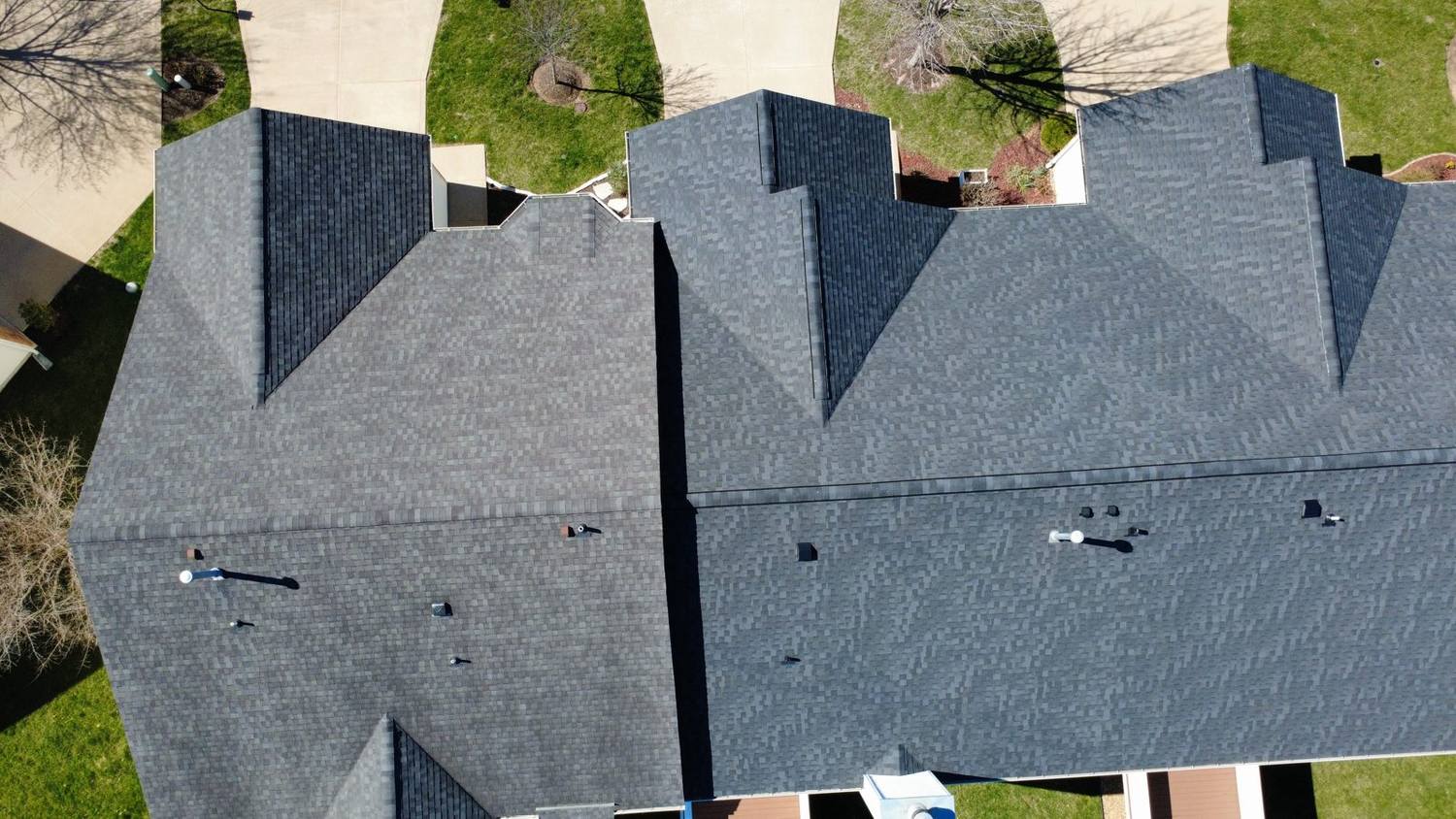
At Emmendorfer, Amy flies a drone for overhead photos and tight detail shots on steep or fragile roofs, so the whole roof gets documented without a crew member walking a slope that should not be walked. That footage becomes the record you keep and, after a storm, the evidence behind a claim.
Post-storm inspections and your insurance claim
After hail or a wind event, the inspection has a second job: building the case for your insurance claim. Date matters, because most Missouri policies want the claim filed within a set window of the storm, so call for an inspection within days of a known hail or wind event rather than waiting for a leak. The inspector documents every hail bruise and wind-lifted shingle with photos, marks the test squares an adjuster uses to count hits, and ties the damage to the storm date.
The hard part is the adjuster meeting, and this is where the right roofer pays off. Tom Emmendorfer meets your insurance adjuster on the roof, start to finish, and walks the same damage with them so the approved scope matches what the storm actually did. Adjusters miss damage, lowball scope, or approve a patch when the slope needs replacement. Having Tom on the roof beside them keeps the claim honest.
One legal note for Franklin County homeowners. Under Missouri law no roofer can pay, rebate, or waive your insurance deductible, so anyone who offers a free roof or to eat your deductible is breaking the law. A straight inspection documents real damage, files an honest claim, and tells you plainly whether the storm did enough to warrant one.
Thermal imaging and the free inspection Emmendorfer offers
Some moisture never shows on the surface. Thermal imaging uses an infrared camera to read temperature differences across the roof and ceiling, because wet insulation and a damp deck hold heat differently than dry material. A trained operator can map a leak path that is invisible to the eye, catch a slow flashing leak before it stains drywall, and confirm whether a past leak is truly dried out or still feeding moisture into the deck.
It is most useful on low-slope sections, flat porch roofs, and homes where a ceiling stain appears with no obvious source above it. Thermal does not replace a hands-on inspection, but it narrows a mystery leak to a spot so the repair is targeted instead of guesswork. Pair it with the attic check and you find moisture before it becomes rot.
Emmendorfer Exteriors offers a free, no-obligation roof inspection across Franklin County, including Union, Washington, Pacific, St. Clair, Sullivan, Villa Ridge, and New Haven. A real family member walks your roof, documents what they find, and hands you a written estimate only if you need work. And on every job we run, we magnet-sweep the entire site for nails before we leave, so your yard and tires stay safe.
Roof Inspection Guide: common questions
Get a free roof inspection in Franklin County
A real Emmendorfer family member walks your roof, documents what they find, and hands you a written estimate only if you need work. Free and no obligation across Union, Washington, and all of Franklin County. Call (314) 568-4163.
- We walk your actual roof before we quote it
- The manufacturer is named on your written estimate
- The price you approve is the price you pay
- Tom handles your insurance claim start to finish